Goat Farming: A Comprehensive Business Plan for African Youth
Discover how goat farming presents a compelling and sustainable investment opportunity for young entrepreneurs across Africa with low startup capital, high adaptability, and diversified revenue streams.
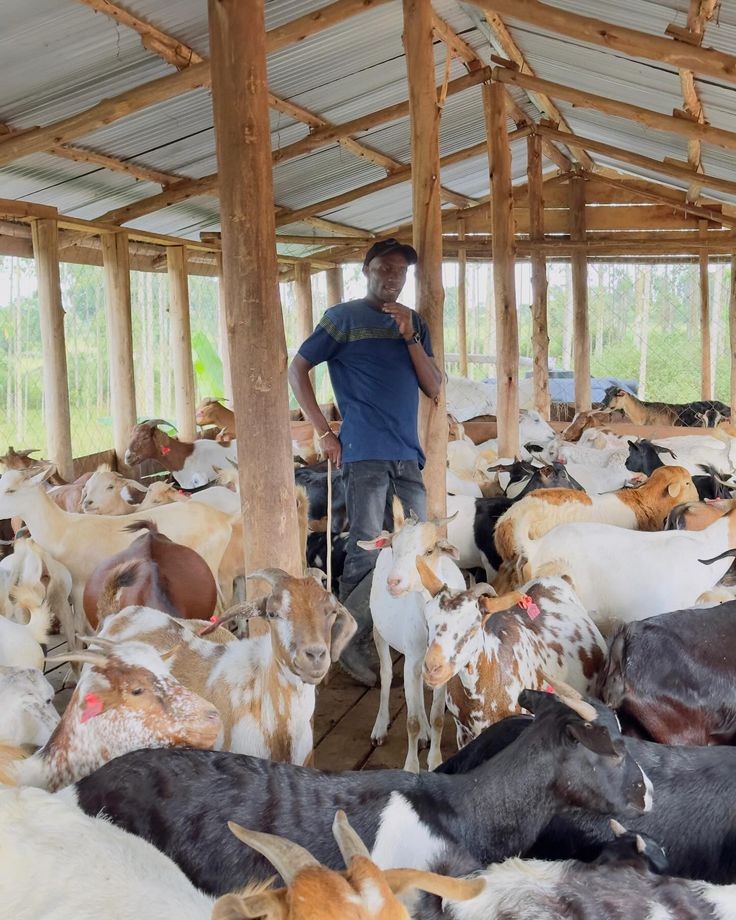
🐐 Goat Farming: A Comprehensive Business Plan for African Youth
Goat farming presents a compelling and sustainable investment opportunity for young entrepreneurs across Africa. Characterized by low startup capital requirements, high adaptability, and diversified revenue streams, this sector is poised for significant growth. This business plan outlines the steps, financial projections, and strategic advantages of establishing a commercially viable goat farming operation.
💡 I. Executive Summary: The Opportunity
The "Youth Goat Agribusiness" venture aims to establish a modern, intensive, or semi-intensive goat farming operation focused on producing meat (chevon) and/or breeding stock for high-demand local and regional markets. Leveraging the continent's large youth population, readily available land resources, and increasing demand for animal protein, this business offers a high return on investment (ROI) with a quick gestation period. The primary goal is to achieve financial sustainability within three years and become a recognized supplier of high-quality goat products.
🌍 II. Industry and Market Analysis
A. Market Demand
Goat meat (chevon) is one of the most widely consumed meats globally, and demand is particularly strong across Africa due to its cultural significance, low fat content, and relatively lower cost compared to beef.
B. Competitive Advantage
Focusing on improved local breeds (e.g., West African Dwarf, Boer crossbreeds) and adopting modern management techniques will differentiate the business.
📈 III. Business Model and Operations
A. Operational Strategy (The Farm)
The business will adopt a semi-intensive system, combining controlled grazing during the day with secure housing at night.
| Phase | Description | Key Activities |
|---|---|---|
| Setup (Month 1-3) | Land securing, housing construction, initial herd procurement. | Fence construction, shelter building, buying foundation stock. |
| Growth (Year 1-3) | Breeding, herd expansion, disease control. | Scheduled breeding, vaccination program, feed formulation. |
| Commercial (Year 3+) | Maximum off-take, sales optimization, diversification. | Selling meat and breeding stock, potential milk/skin production. |
B. Herd Management
C. Revenue Streams
💰 IV. Financial Plan (Sample Projections)
The financial plan is based on a conservative model starting with 100 foundation stock (5 bucks, 95 does).
A. Startup Costs (Estimated)
| Item | Estimated Cost (USD) | Notes |
|---|---|---|
| Land Lease/Purchase (5 acres) | $5,000 - $10,000 | Varies greatly by location. |
| Housing & Fencing Construction | $3,000 - $5,000 | Elevated housing to prevent pneumonia. |
| Foundation Stock (100 Goats) | $6,000 - $10,000 | $60 - $100 per improved doe/buck. |
| Equipment (Feeders, Waterers, Tools) | $500 - $1,000 | Basic equipment needs. |
| Total Estimated Startup Capital | $14,500 - $26,000 |
B. Expected Revenue and Growth (Year 1-3)
Assuming a 150% kidding rate annually (meaning 150 kids born from 100 does) and 80% survival rate:
| Metric | Year 1 | Year 2 | Year 3 |
|---|---|---|---|
| Initial Does | 95 | 95 | 95 |
| New Kids Surviving | 120 | 144 | 173 |
| Herd Size End of Year | 215 | 359 | 532 |
| Goats Sold for Meat (Est.) | 70 | 120 | 200 |
| Est. Annual Revenue (USD) | $7,000 | $12,000 | $20,000 |
Note: Revenue is highly dependent on local market price (assuming an average $100/goat sold).
The high growth rate is achieved by retaining female offspring for breeding until the desired herd size is met.
C. Funding Needs
The business will seek funding through youth agricultural grants, development bank loans, and private investment to cover the initial startup costs.
✅ V. Why Goat Farming is Ideal for African Youth
Goat farming offers unique advantages that align perfectly with the resources and ambition of Africa's youth:
1. Low Barrier to Entry
2. High Fertility and Fast Reproduction
3. Resilience and Adaptability
4. Market Versatility
By focusing on modern management, health, and aggressive breeding, young African entrepreneurs can transform goat farming from a subsistence activity into a highly profitable, scalable agribusiness.
Join the Youth Goat Agribusiness Revolution
Farm to the World NGO is committed to supporting young entrepreneurs in launching successful goat farming operations through our Planting for Cash Phase Two initiative. We provide expert guidance, market connections, and comprehensive support to help turn your goat farming dreams into profitable reality.
Ready to explore this opportunity? Contact our team to learn more about how we can support your journey into commercial goat farming.
Farm to the World NGO - Transforming Agriculture, Empowering Communities, Creating Wealth