The Ultimate Guide to Goat Vaccination: Protecting Your Herd and Boosting Profits
A comprehensive goat vaccination schedule and best practices guide to help livestock farmers eliminate preventable diseases, lower mortality rates, and secure their investment.
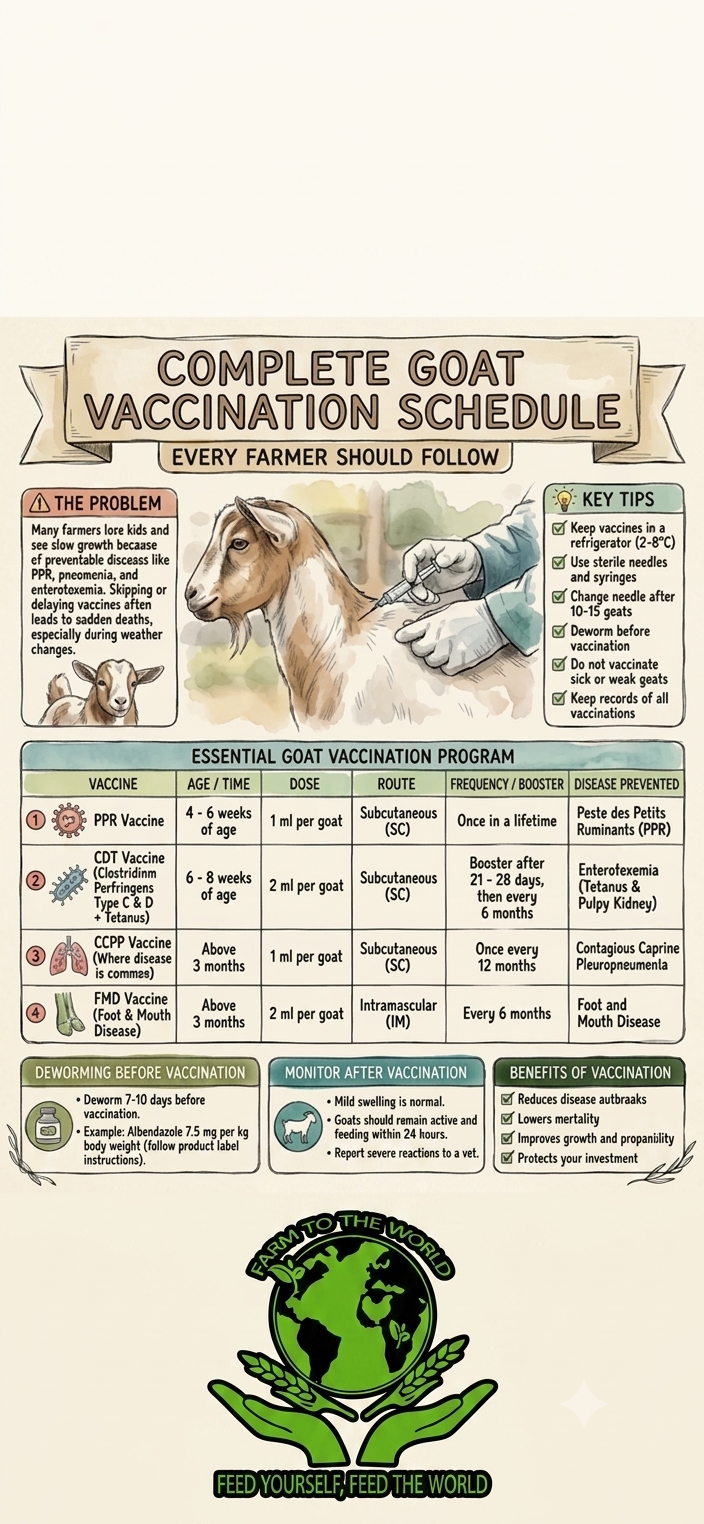
As a livestock farmer, there is nothing more disheartening than walking into your barn to find your kids or mature goats suffering from sudden, preventable illnesses. Diseases like Peste des Petits Ruminants (PPR), pneumonia, and enterotoxemia are notorious silent killers in the caprine world. Skipping or delaying a simple injection often leads to sudden deaths—especially during unpredictable weather transitions.
At Farm to the World, we believe that a healthy herd is a profitable herd. If you want to eliminate the guesswork, lower mortality rates, and secure your livestock investment, this comprehensive goat vaccination schedule is your definitive roadmap.
Why Timing is Everything: The Essential Goat Vaccination Schedule
To build solid immunity, vaccines must be administered at the correct age, dosage, and route. The flyer below is the essential protocol every modern goat farmer should implement.
3 Critical Best Practices for Vaccine Success
An effective immunization program goes beyond simply sticking a needle in an animal. To ensure the vaccines actually work, keep these proven management strategies in mind:
1. Deworm Before You Vaccinate
Never vaccinate a worm-burdened goat. Parasites suppress the animal's immune system, making it difficult for its body to mount a strong defense response to the vaccine.
The Golden Rule: Administer a dewormer 7 to 10 days before your scheduled vaccination date.
Dosage Example: Use Albendazole at 7.5 mg per kg of body weight (always verify and follow the exact product label instructions).
2. Practice Golden Needle Hygiene
Keep it Cold: Vaccines are highly sensitive biological products. Store them strictly in a refrigerator between 2°C and 8°C. Never let them freeze or overheat.
Sterilize: Always use sterile needles and syringes.
The 10-15 Rule: To prevent cross-contamination and dull needles (which cause pain and swelling), change your needle after every 10 to 15 goats.
Safety First: Do not vaccinate sick or weak goats. Wait until they recover so their immune systems can handle the vaccine properly.
3. Post-Vaccination Monitoring
After administering shots, monitor your herd closely for 24 to 48 hours.
What's Normal: Mild swelling or a small lump at the injection site is perfectly common and usually fades away. The goats should remain active, alert, and return to feeding within 24 hours.
What's Not: If an animal shows severe distress, acute respiratory issues, or severe allergic reactions (anaphylaxis), report it to a veterinarian immediately.
The Bottom Line: Your ROI on Health
Vaccination isn't an expense—it is a high-yield insurance policy for your farm business. Setting up a strict health calendar pays off exponentially by:
Take control of your herd's health today. Download this schedule, print it out for your barn, and let's feed the world together!
What does your current herd health plan look like?
Let us know your challenges or successes in the comments below!
#GoatFarming #LivestockManagement #VeterinaryHealth #FarmToTheWorld #AnimalHusbandry #Agribusiness #SustainableFarming #HealthyHerd #FarmersOfInstagram #CaprineHealth